
Framework Convention on Tobacco Control
The World Health Organization Framework Convention on Tobacco Control (WHO FCTC) entered into force on February 27, 2005 and is one of the most widely adopted treaties in the United Nations system.
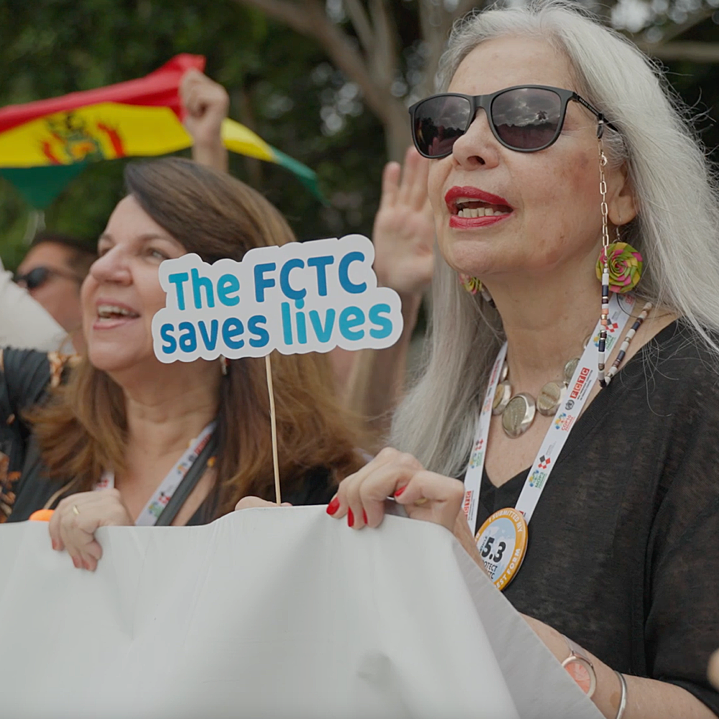
The World Health Organization Framework Convention on Tobacco Control (WHO FCTC) entered into force on February 27, 2005 and is one of the most widely adopted treaties in the United Nations system.
What is the WHO FCTC?
The WHO FCTC is a legally binding treaty that requires countries bound by the treaty — or Parties — to implement evidence-based measures to reduce tobacco use and exposure to tobacco smoke. There are 183 Parties to the WHO FCTC as of March 2026. When effectively implemented, the WHO FCTC is a powerful tool to reduce the devastating global consequences of tobacco products on health, lives and economies.
Required Actions to Reduce Tobacco Use and
Exposure to Tobacco Smoke
The WHO FCTC provides a broad framework of obligations and rights for Parties to implement various tobacco control measures.
Parties to the WHO FCTC have adopted Guidelines for implementation to provide effective implementation of the treaty. The Guidelines contain principles, definitions, and key legislative elements that the Parties adopted by consensus to assist them in meeting their WHO FCTC legal obligations. The WHO FCTC and its Guidelines for implementation commit Parties to:
- Protect their public health measures from the commercial and other vested interests of the tobacco industry.
- Protect all people from tobacco smoke exposure in all indoor public places, indoor workplaces, on all means of public transport and, as appropriate, other places.
- Ban all forms of tobacco advertising, promotion and sponsorship.
- Place large pictorial health warnings on tobacco product packaging and prohibit the use of false and misleading labeling and packaging that may imply that one tobacco product is less harmful than another.
- Implement price and tax measures to reduce the demand for tobacco.
- Regulate and require disclosure of the contents and emissions of tobacco products.
- Take other action aimed at preventing and reducing tobacco consumption, nicotine addiction and exposure to tobacco smoke.
Progress in Protecting Public Health
At least 79 countries have enacted or implemented comprehensive smoke-free legislation across the globe, including all subnational jurisdictions in Australia and Canada.
Every country in South America has passed comprehensive smoke-free legislation.
At least 110 countries and jurisdictions have enacted or implemented pictorial warning labels that cover at least 50% of tobacco packaging.
At least 68 countries have passed comprehensive tobacco advertising, promotion and sponsorship bans.

Role of Civil Society
The WHO FCTC recognizes that the participation of civil society is essential to achieve the objective of the WHO FCTC and its Guidelines for implementation and to counter tobacco industry efforts to stop, delay, or dilute effective tobacco control measures. Drawing members from more than 70 countries, the Global Alliance for Tobacco Control (GATC) plays a key role in educating policymakers and strengthening cooperation across borders.
The Campaign for Tobacco-Free Kids supports governments and civil society partners in low- and middle-income countries to adopt strong WHO FCTC-based measures.
Related Global Resources
Last updated July 15, 2026