
Health Warning Labels
Showing the truth, saving lives
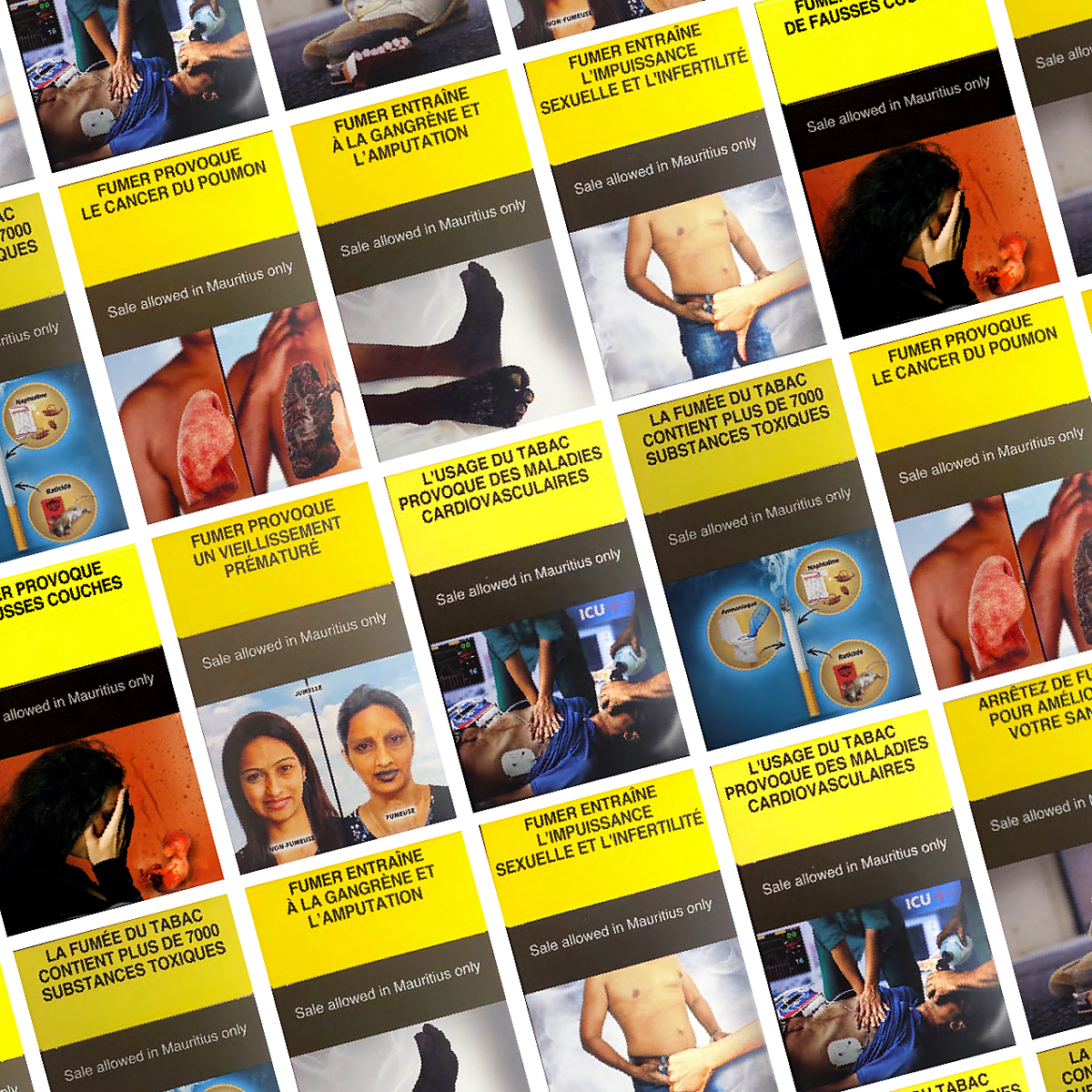
Large, multiple, rotating, pictorial health warning labels (HWLs) on tobacco packages are a key piece of a comprehensive strategy to reduce tobacco use.
Tobacco companies depend on package design to build brand recognition and promote sales. Packaging establishes brand imagery that contradicts the dangers of tobacco use.
Regulating tobacco packaging is critical to tobacco control efforts. Tobacco packs can effectively convey messages about the harmful effects of tobacco use, as well as how to quit.
Showing the truth, saving lives
Large, multiple, rotating, pictorial health warning labels (HWLs) on tobacco packages are a key piece of a comprehensive strategy to reduce tobacco use.
Tobacco companies depend on package design to build brand recognition and promote sales. Packaging establishes brand imagery that contradicts the dangers of tobacco use.
Regulating tobacco packaging is critical to tobacco control efforts. Tobacco packs can effectively convey messages about the harmful effects of tobacco use, as well as how to quit.
Health Warning Labels in the U.S.
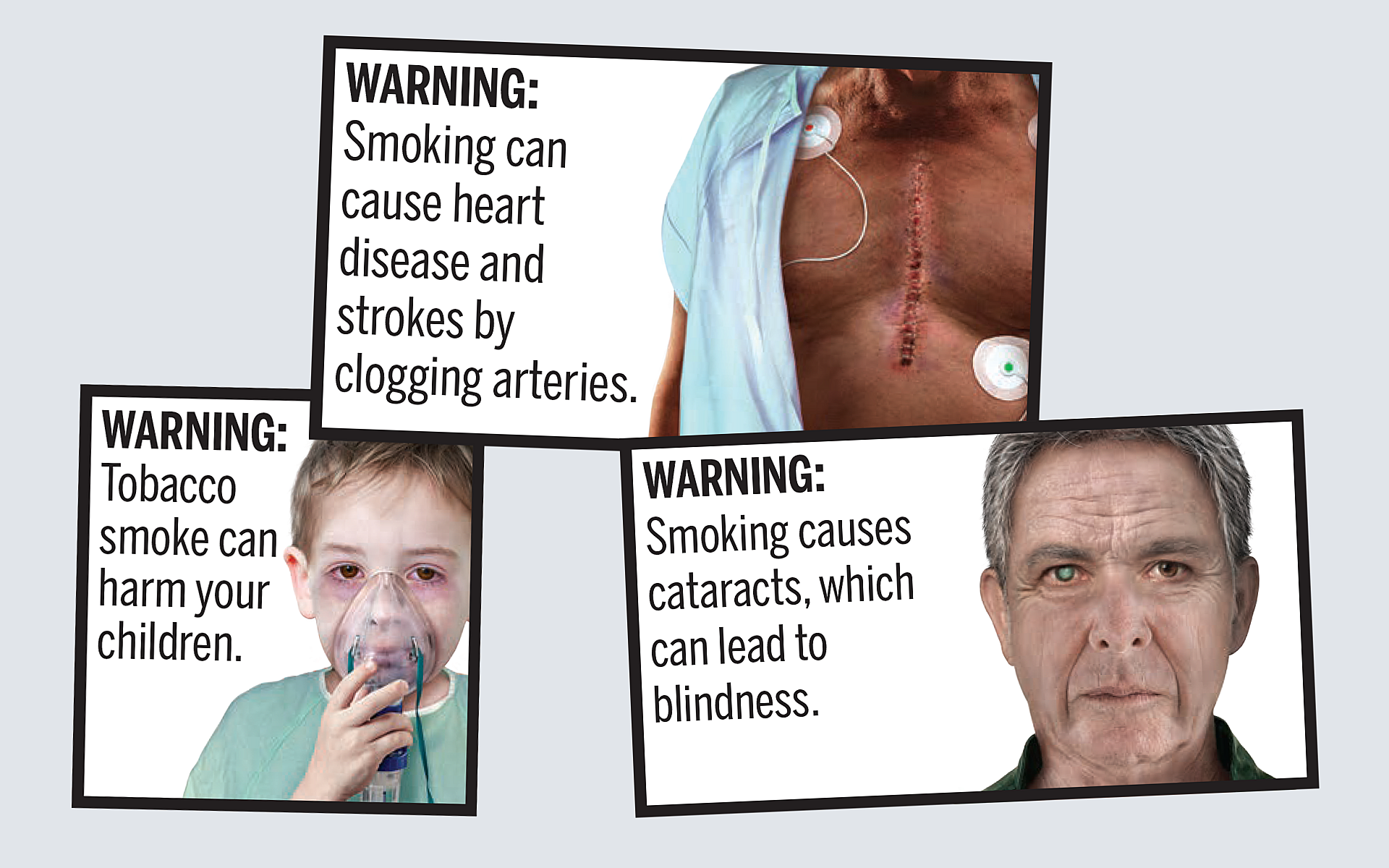
In the U.S., cigarette packs have had the same four text-only Surgeon General’s warnings since 1984. The 2009 Tobacco Control Act required the Food & Drug Administration (FDA) to issue a regulation mandating large, pictorial HWLs for cigarettes, but the FDA’s initial rule was struck down in 2012. In 2020, following a lawsuit from public health groups, the FDA issued a second rule with revised pictorial HWLs . This rule has not yet been implemented due to ongoing legal challenges from the tobacco industry.

Health Warning Labels Around the World
At least 140 countries and jurisdictions have adopted pictorial HWLs. Timor-Leste and Türkiye have the largest HWLs in the world at 92.5% of the front and back surfaces.
Article 11 of the WHO Framework Convention on Tobacco Control (WHO FCTC) requires Parties to adopt and implement large, clear and rotating HWLs on all tobacco products. Guidelines for implementation provide clear recommendations to increase the effectiveness of HWLs.
What is the evidence on Health Warning Labels?
Research shows that HWLs are most effective when they are large and contain both colored pictures and words to increase knowledge about risks associated with tobacco use. They can motivate users to quit, discourage non-users from starting, and keep former users from starting again. HWLs must also be rotated periodically with different message content to avoid over exposure.
66%
140
One of the most cost–effective and impactful tobacco control measures available to governments is warning people about the harms caused by tobacco through the implementation of graphic health warnings.
Related U.S. Resources
Related Global Resources
Last updated July 15, 2026